
How to Choose a Finance Automation Partner in Australia: The CFO's Evaluation Framework
Ordron28 min read
Most finance automation projects fail not because the technology is wrong but because the partner is wrong. The bot gets built. The demos look clean. The contract gets signed. And then the automation sits on a shelf because it was designed around a vendor's preferred platform rather than your actual finance environment. The technology almost never deserves the blame. The selection process does.
Australian CFOs are under real pressure in 2026. The ABS Digital Economy report shows that 68% of mid-market Australian businesses have attempted at least one finance process automation initiative in the past three years, yet independent surveys consistently show fewer than half of those projects deliver the projected ROI within the first twelve months. The gap is not a technology gap. It is a partner gap. The wrong consultant sells you a roadmap. The right one ships work, measures it after go-live, and gives you the numbers attached to a real outcome.
This guide gives you a structured evaluation framework built from the work we have shipped across eight industries and seventeen engagements at Ordron. You will get the seven non-negotiable criteria, the red flags that predict a bad engagement before a contract is signed, a build-versus-buy-versus-partner decision tree, a demo checklist, and the Australian-specific compliance and ecosystem considerations that most generic automation guides ignore entirely. If you want to find your automation quick wins without burning budget on a misaligned vendor, this is where to start.
Key Takeaways
- Partner selection is the highest-risk decision in any finance automation project, not platform selection.
- A 7-criteria evaluation framework covers: industry experience, platform coverage, implementation methodology, local support, pricing transparency, proof of ROI, and post-go-live support.
- Red flags include overpromised timelines, no Australian case studies, and skipping a process discovery phase.
- Australian-specific considerations, including ATO compliance, Single Touch Payroll, and Xero/MYOB/SAP ecosystem familiarity, should be non-negotiable screening criteria.
- The build-in-house versus buy software versus hire-a-partner decision depends on your team's capacity, system complexity, and timeline tolerance.
- A structured pilot, scoped to one high-volume process, is the lowest-risk way to validate a partner before committing to a full programme.
Summary Table: Partner Evaluation Criteria at a Glance
| Evaluation Criterion | What Good Looks Like | What Bad Looks Like |
|---|---|---|
| Industry Experience | Case studies in your sector with specific before/after figures | Generic percentage ranges, no named industry context |
| Platform Coverage | Proven integrations with Xero, MYOB, SAP, or your actual stack | Only supports their preferred platform, requires migration first |
| Implementation Methodology | Documented process discovery phase before scoping | Jumps straight to solution design without mapping your process |
| Local Support | Australian-based team, accessible during AEST business hours | Offshore support desk, unclear escalation paths |
| Pricing Transparency | Fixed-scope pilot pricing, clear change-control process | Vague T&M engagements, no milestone-based payments |
| Proof of ROI | Published, measured outcomes from completed engagements | Aspirational projections, vendor-produced ROI calculators only |
| Post-Go-Live Support | Defined hypercare period, SLA-backed ongoing support | Handover to internal IT after go-live with no structured transition |
Why Partner Selection Is the Highest-Risk Decision in Finance Automation
Every CFO I speak with has a story about a technology project that went sideways. The ERP implementation that took three years instead of one. The BI platform nobody uses. The accounts payable system that required two full-time administrators to maintain what it supposedly automated. In almost every case, the technology was not the problem. The implementation partner was.
Finance automation is particularly exposed to this risk because the stakes compound quickly. When a general ledger coding process is automated incorrectly, the errors do not announce themselves. They accumulate silently across hundreds of transactions until month-end close surfaces them. When an accounts payable bot is built without understanding your supplier payment terms, it optimises cycle time at the expense of early payment discounts or inadvertently triggers late fees. The cost of a bad automation is not just the sunk cost of the project. It is the downstream cost of fixing the data, the staff time spent on exception handling that was supposed to disappear, and the organisational trust deficit that makes the next automation initiative ten times harder to get approved.
Gartner's analysis of RPA and intelligent automation implementations consistently places "implementation partner capability" among the top three factors determining project success, ahead of platform selection and ahead of internal change management maturity. This holds especially true in the Australian mid-market, where finance teams are typically small, the ERP landscape is fragmented across Xero, MYOB, NetSuite, and legacy systems, and there is rarely a dedicated automation centre of excellence to absorb a poorly scoped engagement.
The implication is straightforward: spend more time evaluating the partner than evaluating the platform. The platform matters, but a skilled partner can automate around almost any system. An unskilled partner will fail on the best stack money can buy.
The 7 Non-Negotiable Evaluation Criteria
1. Industry and Process Experience
Ask for case studies in your specific industry, not just finance automation in general. A partner who has automated accounts payable for a manufacturing firm understands three-way PO matching, goods receipt discrepancies, and multi-entity GL coding in a way that a partner whose experience is limited to professional services simply does not.
When reviewing case studies, insist on specifics. Which platform did the automation run on? What was the before-and-after cycle time? What was the error rate before and after? Vague percentage improvements that could mean anything are how vendors avoid accountability. Specific published outcomes, measured after go-live, are what differentiate credible partners from aspirational ones.
At Ordron, we publish no aspirational projections. Every case study in our library names the exact automation shipped, the stack it ran on, and the measured result. For example, when working with a large enterprise finance team processing high monthly invoice volumes, we deployed RPA combined with intelligent document understanding to read, PO-match and code supplier invoices automatically, routing only exceptions to human reviewers. The result was greater than 95% coding accuracy and a 65% reduction in invoice processing time, with no replacement of the existing AP system. That level of specificity is what you should demand from any partner you are evaluating.
Questions to ask:
- Can you show me three case studies in my industry with specific before-and-after figures?
- What was the actual error rate after go-live, not during UAT?
- Have you automated on our specific ERP or accounting platform before?
2. Platform Coverage and Stack Flexibility
The worst outcome in finance automation is being told you need to migrate to a new system before automation can begin. That is a vendor protecting their preferred integration path, not solving your problem.
A strong partner can work with what you have. This includes legacy ERPs with no modern APIs, shared inboxes used as workflow tools, and hybrid environments where one entity runs Xero and another runs SAP. The approach I call bridge, wrap and extend means the automation sits between your existing systems, connects them, and extends their capability without requiring you to replace anything.
I built exactly this for a family-owned logistics operator running a twenty-year-old ERP with no APIs. The ERP was not going anywhere. It was deeply embedded in their operations and their team knew it cold. Instead of pushing a migration, we built an RPA bot that drove the legacy ERP interface directly, validated data against SQL, and synced clean records into Xero and reporting dashboards. The result was over 160 hours of manual work eliminated per month, with data integrity maintained across both systems. Not a single system was replaced. That outcome would never have shipped if we had made migration a prerequisite.
Questions to ask:
- Have you automated on a system with no API access before? How?
- Do you require us to migrate or upgrade any system before starting?
- What platforms do you have certified integrations or proven build experience on? See Ordron's platform coverage for an example of what transparent platform documentation looks like.
3. Implementation Methodology
Process discovery is non-negotiable. Any partner who skips it is guessing at your requirements and billing you for the privilege.
A structured methodology begins with process mapping: documenting every step, every exception, every handoff, and every data source involved in the target process. It then moves to feasibility scoring, where steps are assessed for automation suitability. Only after that should any build work begin.
Ask specifically how they handle exceptions. Finance processes are full of them. The invoice that arrives without a PO number. The supplier who sends PDFs that are actually scanned images. The cost centre code that changed mid-year. A partner who has not thought deeply about exceptions is building automation that will break in production.
Questions to ask:
- Walk me through your process discovery methodology step by step.
- How do you handle exception scenarios identified during discovery?
- At what point in the engagement is scope locked? What is your change-control process?
4. Local Support and Australian Market Knowledge
Time zone matters more than most buyers acknowledge during the sales process. When your end-of-month AP run hits an error at 4pm AEST on a Thursday and your support team is in Dublin, that is a very different experience from having a local consultant on the phone within the hour.
Beyond time zone, local market knowledge has a direct bearing on implementation quality. Australian finance operations have specific requirements that offshore teams routinely underestimate: ATO compliance obligations, Single Touch Payroll reporting, PAYG withholding rules, GST treatment across different supply types, and the ACCC's requirements around payment terms for certain industries. If your partner is not fluent in these, they will build automations that are functionally correct but compliance-deficient.
Questions to ask:
- Where is your implementation team based?
- What are your support hours, and are they AEST?
- Can you describe your experience with ATO digital reporting requirements?
5. Pricing Transparency and Commercial Structure
Vague time-and-materials engagements with no milestone gates are how projects run to double their original estimate. A credible partner can scope a pilot to a fixed price because they have done similar work before and understand where the variables are.
Look for milestone-based payment structures tied to delivery events: discovery complete, build complete, UAT complete, go-live. Avoid any engagement where the full fee is payable upfront or where there is no mechanism to hold payment if milestones are not met.
Also ask specifically about what is included in the quoted scope. Does it include hypercare post go-live? Does it include documentation? Does it include user training? These are frequently excluded from headline quotes and added back as change requests.
Questions to ask:
- Is this a fixed-price or T&M engagement? If T&M, what is the cap?
- What triggers a change request, and what is the approval process?
- Is post-go-live hypercare included, and for how long?
6. Proof of ROI from Real Engagements
Any partner can produce an ROI calculator that shows you a favourable return. The only thing that matters is whether they have measured actual ROI after go-live on real engagements and whether they will share those figures with you.
At Ordron, across eight industries and seventeen case studies, we have measured a maximum manual work reduction of 85% across completed engagements. Our single-engagement high is 160+ hours of manual finance work returned per month. We publish these because specificity is a form of trust that percentage ranges cannot replicate. You can review the anonymised outcomes across industries on our case studies page and examine engagements like our enterprise AP implementation and our manufacturing multi-system flows case study to understand the level of specificity we consider standard.
Questions to ask:
- Can you show me the measured ROI from three completed engagements, not projected ROI?
- How long after go-live do you measure outcomes?
- What happens if the automation does not achieve the projected outcome?
7. Post-Go-Live Support Model
The go-live date is not the finish line. It is the start of the most important phase: production operations. Finance automations run against live data, interact with real payment systems, and execute real transactions. They need monitoring, maintenance when upstream systems change, and a clear escalation path when something breaks.
Ask specifically about the support model after handover. Is there a defined hypercare period, typically two to four weeks of intensive support immediately post go-live? What is the SLA for production incidents? What happens when your ERP vendor releases an update that breaks a UI-based automation? Who is responsible for remediating it and within what timeframe?
Questions to ask:
- What is your hypercare model post go-live?
- What is your SLA for production incidents by severity?
- How do you handle automation breaks caused by upstream system changes you did not control?
Red Flags That Signal a Bad Fit
Overpromising Timelines
If a partner quotes you a four-week implementation for a complex multi-entity AP automation, something is wrong. Either they have not done a real discovery, or they are telling you what you want to hear. Complex finance automations involving multiple systems, exception logic, and compliance requirements take time to build correctly. A partner who is competing on speed alone is almost certainly skipping the process rigour that keeps automations stable in production.
A realistic timeline for a well-scoped accounts payable automation, from kick-off to go-live, is typically eight to fourteen weeks depending on complexity, system access provisioning, and UAT cycles. Faster is possible for simple, single-system processes. Faster is a red flag for anything complex.
No Australian Case Studies
Finance automation is not generic. Australian businesses operate under ATO rules, use a distinct ecosystem of accounting platforms, and have specific GST, STP, and PAYG obligations that directly affect how automated coding and approval workflows must be designed. A partner with no Australian case studies is learning on your budget.
This is not about nationalism. It is about context specificity. If a partner cannot show you an engagement in Australia involving the platforms and compliance context you operate in, they do not yet have the pattern recognition to scope your engagement accurately.
No Process Discovery Phase
If a partner is ready to start building before they have mapped your process in detail, walk away. Every finance process looks simple from the outside and is full of undocumented exceptions on the inside. Discovery is what converts your stated requirements into an accurate scope. Without it, you will encounter scope creep, production failures, and a project that costs two or three times the original estimate.
Vague Outcome Commitments
Be very wary of any partner who quotes outcomes as percentage ranges without specifying the baseline. "Up to 70% reduction in processing time" is meaningless without knowing what the starting point is. Ask for absolute figures from comparable engagements. If they cannot provide them, they are either not measuring outcomes or not confident in what they would show.
Pressure to Replace Working Systems First
This is a pattern worth naming directly. Some partners, particularly those with a financial interest in a specific platform, will tell you that your existing systems need to be replaced or upgraded before meaningful automation is possible. In my experience, this is frequently untrue and almost always slower and more expensive than the alternative.
You can automate around a legacy system without replacing it. The logistics operator I mentioned earlier had a twenty-year-old ERP with no APIs. We automated it anyway, building a bot that drove the interface directly. The automation shipped in weeks. A platform migration would have taken eighteen months and cost multiples more. The pressure to modernise first is frequently a reason automation never ships, not a prerequisite for it.
Build In-House vs Buy Software vs Hire a Partner
This decision has three genuine options and each is right in different circumstances.
Build In-House
Right when: You have an internal automation team with RPA or Python development experience, the process is stable and well-documented, and you have ongoing capacity to maintain what you build.
Wrong when: Your finance team is small and fully utilised, your systems are complex or poorly documented, or you need results within a defined timeframe. Internal builds typically take longer than expected, maintenance burden falls on staff who have other jobs, and institutional knowledge of the automation logic sits with one or two individuals.
Cost: Low upfront, high in ongoing staff time and opportunity cost.
Buy Off-the-Shelf Software
Right when: Your process is genuinely standard, your systems are well-supported by the software vendor, and you have internal capacity to configure and maintain the product.
Wrong when: Your process has significant exceptions, your systems are not on the software's supported list, or you need customisation that the product does not support. Off-the-shelf AP automation tools, for example, assume relatively standard invoice formats and ERP integrations. The moment you have suppliers sending PDFs that are actually image scans, or a legacy ERP that requires screen-scraping, the off-the-shelf product hits its limits.
Cost: Predictable SaaS licensing, but often underestimates implementation and customisation costs.
Hire a Partner
Right when: Your process involves multiple systems, significant exception logic, or Australian compliance requirements that need domain expertise to address correctly. Also right when you need to ship quickly and cannot absorb the learning curve of building in-house.
Wrong when: Your process is genuinely simple, well-supported by off-the-shelf tooling, and your team has the capacity to implement and maintain it independently.
Cost: Higher upfront, but a well-scoped engagement delivers faster time to value and transfers knowledge to your team in the process.
| Option | Best For | Risk | Time to Value |
|---|---|---|---|
| Build In-House | Stable, simple processes; capable internal team | Knowledge concentration risk | Slow |
| Buy Software | Standard processes; supported ERP stack | Customisation ceiling | Medium |
| Hire a Partner | Complex, multi-system; compliance-critical | Partner selection risk | Fast if right partner |
If you are unsure which path suits your situation, the Ordron Finance Automation Scorecard helps you assess your readiness and identify where a partner adds the most value.
The Demo Checklist: What to Insist on Seeing
A demo is a sales tool. Vendors control the environment, the data, and the scenario. Your job is to break that control by insisting on specific conditions.
Insist on a live demo, not a recorded walkthrough. Recorded demos are edited to remove failures. A live demo shows you how the partner handles unexpected behaviour in real time, which is exactly what you need to assess.
Bring your own data sample. Provide five to ten real invoices or transactions from your environment, including at least two edge cases or exceptions. Watch how the automation handles them. If the partner declines to use your data, ask why.
Ask them to break it. Ask the partner to demonstrate what happens when an invoice arrives without a PO number, when a supplier code does not match, or when a field is missing. How does the exception get routed? What does the human reviewer see? How is the exception logged?
Ask about the build, not just the output. How long did this automation take to build? How many iterations did it go through before it reached this state? What broke in UAT and how was it resolved?
Ask who built it. Is the person running the demo the person who would build your automation? Or is there a separate delivery team you have not met yet? The quality of the sales team tells you nothing about the quality of the delivery team.
Ask about maintenance. When your ERP upgrades and the screen layout changes, who fixes the bot? How long does that take? What is the cost?
For a comprehensive pre-engagement diagnostic, the Ordron Finance Health Check gives you a structured view of where your finance processes sit today and which are the most viable candidates for automation.
Australian-Specific Considerations
ATO Compliance and Digital Reporting
Australian finance automations must be built with ATO obligations in mind from the start, not retrofitted after go-live. This includes correct GST treatment across different supply types (taxable, GST-free, input-taxed), BAS coding logic, and the treatment of adjustments, credits, and progressive invoices.
Automate a coding process without embedding GST rules correctly and you will generate BAS errors that require manual remediation every quarter. A partner who does not understand Australian tax obligations at the process level is a liability, not an asset.
Single Touch Payroll
Single Touch Payroll Phase 2, now in full operation across Australian payroll systems, requires employers to report granular payroll data to the ATO each pay event. If your automation touches payroll data flows, including journal entries from payroll to the general ledger, inter-entity cost allocations involving staff costs, or reporting that pulls from payroll systems, your partner needs to understand STP Phase 2 data structures and reporting cadences.
Xero, MYOB, NetSuite, and SAP Ecosystem Familiarity
The Australian mid-market accounting landscape is dominated by Xero and MYOB, with NetSuite growing in the mid-to-upper segment and SAP in enterprise. Each platform has specific API capabilities, rate limits, and data structures that directly affect how automations are built and maintained.
A partner who works primarily in one platform will default to solutions that fit that platform, even when your environment uses another. Confirm platform experience before engaging. For reference, see how Ordron's platform documentation specifies integration experience by platform and use case.
APRA Requirements for Financial Services
If you are operating in financial services, APRA's operational risk and technology risk guidelines add a layer of governance that directly affects how automations are designed, documented, and controlled. This includes change management requirements, audit trail obligations, and the need for robust exception handling and monitoring. A partner without financial services experience will not default to meeting these requirements. You will need to drive them explicitly.
Accounts Payable Automation in the Australian Context
Australian AP processes frequently involve supplier invoices in non-standard formats, including handwritten invoices from trade suppliers, PDFs that are actually image scans, and invoices with multiple tax treatments on the same document. This makes intelligent document understanding a more critical capability in Australia than in markets where invoice standardisation is more advanced. For a full treatment of this topic, see our accounts payable automation guide.
How to Structure a Low-Risk Pilot
The pilot is the lowest-risk way to validate a partner before committing to a broader programme. A well-structured pilot answers three questions: Can this partner build automation that works in my actual environment? Can they scope and deliver within the agreed timeframe and budget? Do they work in a way that fits my team's operating style?
Scoping the Pilot
Choose a process that is high-volume, well-documented, and operationally important but not mission-critical to the point where a failure in the pilot would cause a significant business disruption. Accounts payable invoice capture and coding is the most common pilot choice for good reason: it is high-volume, measurable, and representative of the complexity your broader automation programme will encounter.
For a national logistics provider we worked with, the pilot was their SharePoint-based AP process. Each batch of invoices required up to four hours of manual handling per cycle. We plugged OCR and workflow logic directly into the existing SharePoint process, automating document capture, coding and filing without introducing any new software. The pilot result: AP cycle time dropped from four hours to fifteen minutes per batch, with 100% automated filing from day one. That result validated both the technology and the partner fit before any broader commitment was made.
Defining Success Criteria Before You Start
Agree on the specific metrics that define pilot success before any build work begins. Typical metrics include: cycle time before and after, error rate before and after, proportion of transactions processed without human intervention, and time to resolve exceptions. These should be documented in the engagement agreement, not agreed verbally during the retrospective.
Pilot Commercial Structure
A pilot should be fixed-price, time-boxed to six to ten weeks, and structured with a defined go/no-go gate at the end. The go/no-go decision should be based on the agreed success criteria, not on the partner's assessment of the pilot outcome. If the pilot does not meet the agreed criteria, you should be able to walk away without penalty or with a partial refund. Any partner who resists this structure is not confident in their ability to deliver.
Using Pilot Outputs to Scope the Programme
A well-run pilot generates outputs that directly inform the programme scope: a documented process map, a tested automation architecture, a list of exception scenarios and their handling logic, and a validated estimate of the per-transaction cost of automation. These outputs are valuable regardless of whether you proceed with the same partner.
If you want to understand the full cost of not automating before you scope a pilot, the Ordron Cost of Inaction calculator quantifies the ongoing cost of manual finance processes in your specific context.
Once you are ready to move beyond assessment and into a structured engagement conversation, contact Ordron directly to discuss your environment and where a pilot makes the most sense to start.
References
-
Gartner Robotic Process Automation and Intelligent Automation Market Analysis (2025-2026): Gartner's ongoing coverage of the RPA and intelligent automation market, including implementation success factors, partner selection criteria, and the relative importance of partner capability versus platform selection. Available through Gartner's research portal for subscribers.
-
ACCA (Association of Chartered Certified Accountants) Professional Insights: Finance Automation and the Future of the CFO Function (2025): ACCA's survey-based research on the adoption of finance automation across global organisations, including barriers to success, ROI measurement practices, and the role of implementation partners. Available at accaglobal.com.
-
Australian Bureau of Statistics (ABS) Digital Economy Report: Business Use of Information Technology (2025-2026): The ABS annual survey of Australian business technology adoption, including data on the proportion of mid-market businesses that have attempted finance process automation and the reported outcomes. Available at abs.gov.au.
-
FinTech Australia Industry Report: State of Fintech and Finance Technology Adoption in Australia (2026): FinTech Australia's annual review of technology adoption across Australian finance functions, including data on the Xero and MYOB ecosystem, AP automation adoption rates, and emerging intelligent automation use cases. Available at fintech.org.au.
-
Australian Taxation Office (ATO) Digital Service Provider Guidelines and Single Touch Payroll Phase 2 Technical Specifications (2024-2026): ATO technical documentation covering STP Phase 2 reporting requirements, GST coding obligations, and digital service integration standards relevant to automated finance processes. Available at ato.gov.au.
-
APRA Prudential Practice Guide CPG 234: Information Security and Operational Risk (current edition): APRA's guidance on information security and operational risk management for regulated financial services entities, including requirements relevant to automated processing systems, audit trail obligations, and change management. Available at apra.gov.au.
Frequently asked questions
- How much does a finance automation partner typically charge in Australia?
- Engagement costs vary significantly by scope and complexity. A well-scoped pilot covering a single process such as accounts payable invoice capture typically ranges from $15,000 to $35,000 AUD, depending on system complexity, the number of exception scenarios, and whether intelligent document understanding is required. A broader programme covering multiple processes across multiple systems can range from $60,000 to $200,000 AUD or more. Always ask for a fixed-price pilot with clear success criteria before committing to a larger programme.
- How long does a typical finance automation implementation take?
- A well-scoped pilot for a single process typically takes eight to twelve weeks from kick-off to go-live, including process discovery, build, UAT, and go-live preparation. Broader programmes covering multiple processes run across three to twelve months depending on complexity and the number of systems involved. Timelines shorter than six weeks for a complex multi-system automation are a red flag unless discovery has already been completed.
- What contract structure should I insist on with a finance automation partner?
- Insist on a milestone-based payment structure tied to specific delivery events: discovery complete, build complete, UAT passed, and go-live achieved. For a pilot, a three-stage structure works well: one third on kick-off, one third on build completion, one third on successful go-live against agreed success criteria. Include a post-go-live hypercare period of at least four weeks as part of the core scope.
- How do I measure a finance automation partner's performance after go-live?
- Define success metrics before the engagement starts. Key metrics include: straight-through processing rate, exception rate and resolution time, error rate compared to pre-automation baseline, cycle time reduction, and hours returned per month. Measure these at thirty, sixty, and ninety days post go-live. A credible partner will welcome this measurement and will have built monitoring and reporting into the automation from the start.
- When should I consider switching finance automation partners?
- Consider switching if: the automation is not meeting agreed success criteria at ninety days post go-live without a credible remediation plan; the partner has missed two or more milestone dates without adequate notice; production incidents are exceeding agreed SLAs; or the partner is consistently proposing system replacement rather than adapting their automation approach. The pilot structure exists precisely to surface these issues before a full programme commitment is made.
- Does my business need to replace legacy systems before automating finance processes?
- No. You can automate around legacy systems, including ERPs with no modern API access, using RPA bots that drive the user interface directly. Replacing working systems first is one of the most persistent and costly myths in finance automation. The pressure to modernise first frequently comes from partners with a financial interest in platform migration and is a reason automation never ships, not a prerequisite for it.
- What Australian compliance requirements should my finance automation partner understand?
- At minimum, your partner should understand: GST treatment across different supply types and ATO coding requirements; BAS period-end processing; Single Touch Payroll Phase 2 data structures if the automation touches payroll data flows; superannuation guarantee compliance; and PAYG withholding treatment. Financial services organisations should also confirm APRA operational risk and governance requirements are designed into the automation from the start.
- How do I know if my finance processes are actually ready for automation?
- Processes most suitable for automation are high-volume, repetitive, rule-based, and involve structured or semi-structured data. Processes not yet ready for automation typically have undocumented rules, very high exception rates requiring significant human judgement, or underlying data quality issues. Use a structured assessment tool such as the Ordron Finance Automation Scorecard to evaluate your processes before engaging any partner.
Ordron
Finance automation team, Sydney
Ordron builds the finance automation infrastructure that runs AP, AR, reconciliations and reporting on autopilot for Australian mid-market businesses.
More from the Ordron Insights catalogue
Selected by topic. Updated as the agent publishes.
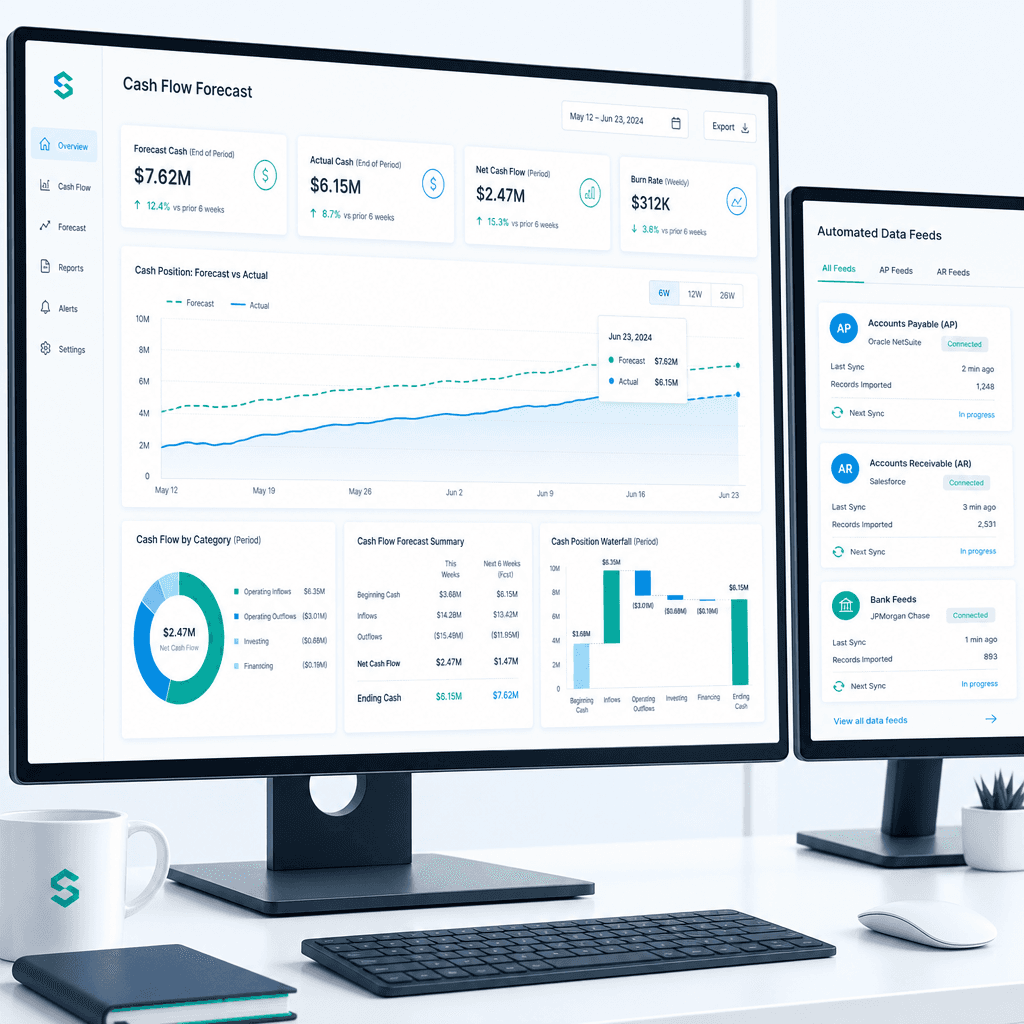
Cash Flow Forecasting Automation: A Practical Guide for Australian Finance Teams (2026)
If your finance team rebuilds the cash flow forecast from scratch every week or every month, you already know where the time goes. Someone pulls an AR ageing…
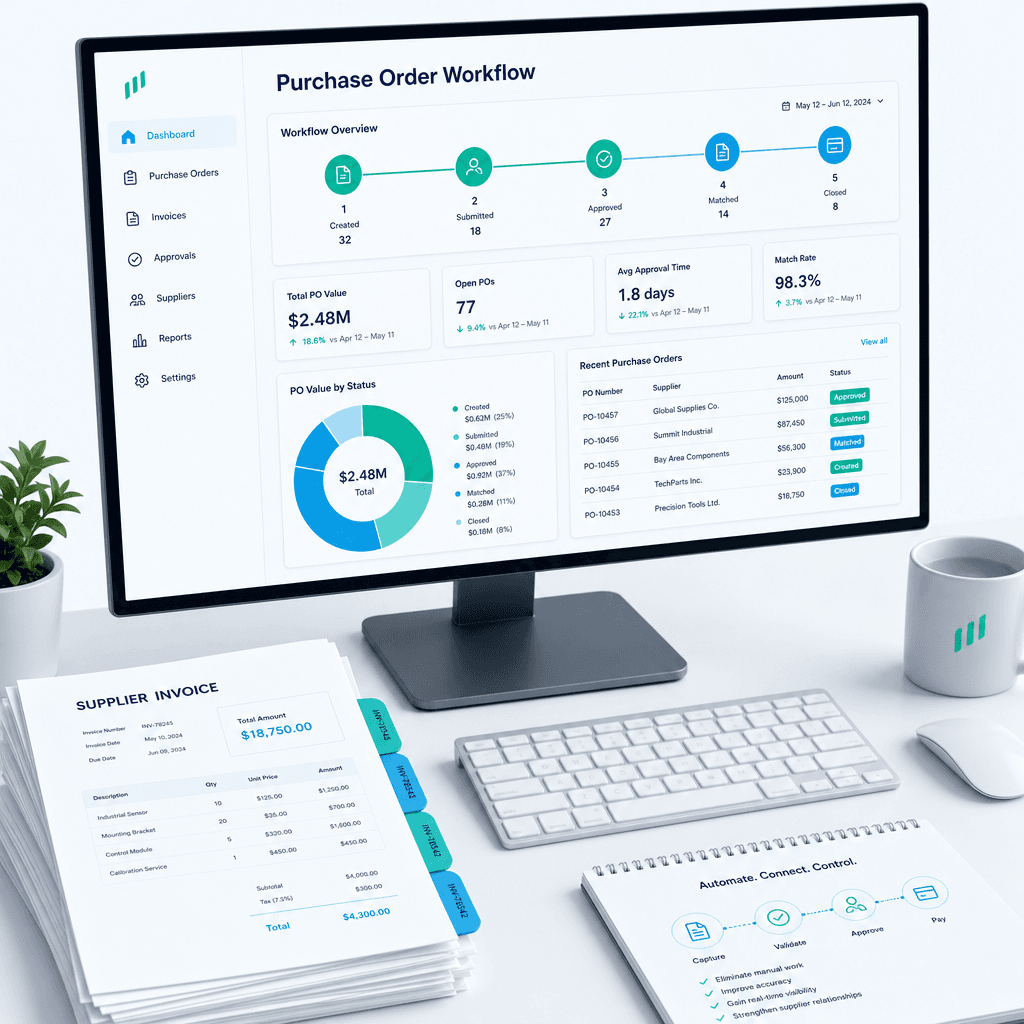
Purchase Order Automation: A Practical Guide for Australian Finance Teams (2026)
If your finance team is still raising purchase orders in a shared inbox, chasing approvals over email, and manually matching invoices line by line before month…
Finance Automation Buyer's Guide for Australian Finance Teams: How to Choose, Scope & Measure Automation That Delivers (2026)
Most finance automation buying decisions are made the wrong way. Teams evaluate vendors on feature lists, watch polished demos, and sign contracts based on…